Why Is My Pressure Washer Smoking? A Practical Troubleshooting Guide
Learn practical, safe steps to diagnose and fix why your pressure washer is smoking. From overheating to oil leaks, Pressure Wash Lab provides clear, actionable guidance for homeowners and DIYers.


If you’re asking why is my pressure washer smoking, the most common causes are overheating, oil or fuel intrusion, or a damaged seal. Immediately stop the unit, unplug (if electric), and allow it to cool. Start with quick checks: oil level, air intake, and nozzle blockage. This quick guide outlines the likely causes and safe next steps.
Why smoking from a pressure washer happens and what it means
If you’re asking why is my pressure washer smoking, you’re not alone. In most cases, smoke signals an overheating motor or a lubrication issue rather than an irreversible failure. According to Pressure Wash Lab, smoking is a warning sign that deserves prompt, careful diagnosis rather than stubbornly continuing to operate. The key is to understand the most common culprits and keep safety front and center while you assess the unit. Treat smoke as a safety cue and pause operation to inspect for oil leaks, clogged filters, or blocked nozzles. This section sets up a practical approach you can apply before calling a pro.
Smoke can appear as wisps, thicker clouds, or a burnt odor. The color, timing, and odor help narrow down the cause. White smoke right after startup often points to heat-related issues, while blue or black smoke may signal burning oil. If you notice a chemical or electrical smell, stop immediately and unplug or shut the fuel supply. Keeping a calm, methodical mindset reduces risk and speeds up a correct diagnosis.
In short, smoking is not a death sentence for the machine, but it does require careful triage. With a structured approach, you can identify the most probable culprits and take the safest path forward. Pressure Wash Lab recommends starting with the simplest checks first and escalating only as needed.
Initial safety steps you should take before inspecting
Safety is non negotiable when handling a smoking pressure washer. Begin by turning off the engine or powering down and unplugging the unit if it’s electric. Allow the system to cool before touching any components. Keep flammable materials away and avoid touching hot surfaces like the engine housing or pump. If you have a gas-powered unit, never inspect the exhaust or muffler while the engine is hot. Use gloves and eye protection, and work in a well-ventilated area. These safety steps prevent burns and inhalation hazards while you inspect.
Next, check the immediate environment for signs of fuel or oil leaks that might be fueling the odor or smoke. If you see fuel or oil on the ground or on components, address leaks before restarting. If a spark plug or electrical wiring shows damage, do not attempt to run the machine until it’s inspected by a professional. These quick safety checks reduce risk and set a solid foundation for diagnosing the problem.
Common smoking scenarios and what they indicate
Different smoke types and timings can hint at distinct issues. White smoke on startup is often related to heat from an overheating motor or pump seals rubbing in. Blue or black smoke tends to indicate burning oil, which could be due to overfilled oil, worn piston rings, or compromised seals. A sweet or acrid chemical odor with smoke may signal a fuel or coolant issue, or even burnt wiring. If smoke appears only under load or during spraying, it could be a clogged nozzle or restricted water supply that causes excessive friction and heat.
Timing matters too. Smoke that appears immediately after starting suggests an internal lubrication or seal problem, whereas smoke that appears after several minutes of operation could indicate overheating from poor ventilation or a clogged air path. Pressure Watch Lab notes that the most frequent smoking causes are overheating and oil-related leaks, but all cases deserve careful checks to avoid unnecessary repairs. If smoke continues after cooling, you’ll want to perform a more thorough diagnostic flow.
Diagnostic flow: symptom → likely causes → practical fixes
A structured diagnostic flow helps separate quick fixes from deeper issues. Start with the symptom: smoke color, odor, when it appears, and how long it lasts. From there, you map to likely causes and apply targeted fixes. Pressure Wash Lab stresses a stepwise approach: train your eye to identify the smoking pattern, then verify with simple checks (oil, air path, nozzle) before escalating to pump seals or internal components. The flow below guides you through that process.
Symptom: Smoke appears during operation
- Likely causes: Overheating motor, oil leaking into combustion area, clogged air intake, incorrect fuel/oil mix (gas units), electrical issues.
- Practical fixes: Allow cooldown, check oil and oil condition, clean or replace air filter, inspect fuel/oil mixtures, inspect wiring and switches. If the problem persists, seek professional service to prevent further damage.
Symptom: Smoke only under load
- Likely causes: Airflow restriction, dirty water intake, clogged nozzle, or a failing unloader valve.
- Practical fixes: Clear intake, clean nozzle, inspect unloader valve for wear and correct operation. Prolonged smoke means deeper pump inspection may be needed.
Step-by-step fixes you can perform for the most frequent causes
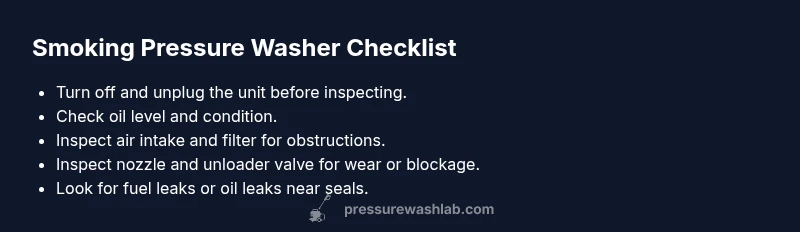
Step 1 — Pause, power down, and let the unit cool. Safety first; never work on a hot machine. Tip: keep a small flashlight handy to inspect tight spaces. Step 2 — Check oil level and oil condition. If the oil is milky or smells burnt, replace the oil and inspect seals for leaks. Tip: use the manufacturer’s recommended oil grade. Step 3 — Inspect the air intake and filter. A clogged filter reduces cooling and airflow, causing overheating and smoke. Clean or replace the filter as needed. Tip: avoid running with a dirty air path. Step 4 — Examine the nozzle and spray pattern. A blocked nozzle creates extra resistance and heat. Clear debris and replace worn nozzles if spraying is inconsistent. Tip: use the correct nozzle size for the job. Step 5 — Check for fuel/oil leaks around seals and hoses. Tighten fittings, replace worn gaskets, and ensure proper lubrication. Tip: avoid running the unit with loose connections. Step 6 — If smoke continues after these steps, do not operate the machine further. Schedule a professional inspection to avoid pump damage or fire risk. Tip: document symptoms and dates to help service techs diagnose faster.
Maintenance tips to prevent future smoking
Regular maintenance is the best defense against smoking issues. Create a simple maintenance cadence that includes oil checks, air filter cleaning, and nozzle inspections after every few uses. Pressure Wash Lab emphasizes correct fuel use and keeping the water supply clean, as contaminants can generate extra heat and cause blockages. Use fresh water and avoid introducing contaminants that can clog components or degrade seals. Periodically inspect pressure relief valves and unloader components for wear. A small investment in routine checks pays off in reliable performance and reduced risk of smoking.
When to seek professional help and warranty considerations
If smoke persists despite your best efforts, it’s time to bring in a technician. Electrical faults, pump seal failures, or camshaft wear require specialized tools and expertise. Check your warranty terms before attempting major repairs, as some actions may void coverage. If your unit is still under warranty, contact the manufacturer or authorized service centers to preserve protection. Pressure Wash Lab suggests documenting symptoms, dates, and all steps taken to speed up service and safeguard your warranty.
Final notes: quick takeaways and long-term care
Treat smoking as a signal to pause, assess, and act—safely. Start with the simplest checks, then escalate if needed. Use quality replacement parts, follow OEM guidance for oil and filters, and maintain a regular service schedule. With disciplined maintenance, you reduce smoking risks and extend the life of your pressure washer. Pressure Wash Lab’s practical approach centers on safety, simple diagnostics, and reliable repair paths.
Steps
Estimated time: 60-90 minutes
- 1
Power down safely and inspect the area
Shut off the machine, unplug if electric, and let it cool. Look for obvious signs of oil leaks or fuel spills around the base.
Tip: Always work on a cool unit to avoid burns and fire risk. - 2
Check oil level and condition
Consult the user manual for the correct oil type and level. If the oil looks burnt, milky, or has a strong odor, replace it and inspect seals.
Tip: Dispose of old oil according to local regulations. - 3
Inspect air intake and filter
Remove the air filter and check for dust or debris. Clean or replace the filter and ensure the air path is clear to improve cooling.
Tip: A clean filter can dramatically reduce overheating. - 4
Examine the nozzle and water flow
Inspect for debris in the nozzle and ensure water supply is steady. Replace worn nozzles and test spray pattern.
Tip: Use the correct nozzle for the job to avoid extra stress on the pump. - 5
Inspect seals and hoses for leaks
Look around seals and pump connections for oil or fuel leaks. Tighten fittings or replace gaskets as needed.
Tip: Leaking seals can cause internal smoking, and ignoring them can worsen damage. - 6
Test the unit under light load or seek professional help
If smoke persists after basic fixes, do not run the machine further. Schedule a professional service to prevent pump damage.
Tip: Document symptoms and dates to assist the technician.
Diagnosis: Machine emits smoke and/or burning odor during operation
Possible Causes
- highOverheating motor or pump
- highOil or fuel leaking into combustion chamber or seals
- mediumClogged air intake or dirty filter
- mediumIncorrect fuel or oil mix (gas units)
- lowElectrical issues causing arcing or insulation damage
Fixes
- easyPause operation, unplug or turn off the unit, and allow to cool.
- easyCheck oil level and oil condition; replace oil if burnt or contaminated; inspect seals for leaks.
- easyClean or replace air filter; clear any intake obstructions to restore airflow.
- mediumInspect nozzle and unloader valve for wear or blockage; replace worn parts as needed.
- mediumInspect wiring, switches, and electrical connections; seek professional help for suspected electrical faults.
Quick Answers
What does white smoke mean when my pressure washer starts
White smoke on startup usually indicates temporary heat buildup or factory lubrication burning off. If it clears after a minute, monitor for changes. If it persists, check oil and air path.
White smoke at startup often means normal warm-up or temporary lubrication burn-off; monitor and check oil and air path if it continues.
Is smoking from a pressure washer dangerous
Yes, smoking can indicate a fire risk or imminent component failure. Stop use, inspect for leaks, and avoid running the unit until the issue is diagnosed or serviced.
Smoking is a warning sign and can be dangerous; stop using the unit and have it checked.
Can using the wrong oil or fuel cause smoking
Using the wrong oil or contaminated fuel can cause overheating and burning smells. Always follow the manufacturer’s recommendations for oil grade and fuel mixture.
Wrong oil or fuel can cause smoking, so stick to the manual’s specs.
How often should I service a pressure washer to prevent smoking
Regular maintenance, including oil changes, filter cleaning, and nozzle checks, reduces smoking risk. Schedule a basic service every season or after heavy use.
Keep up with regular maintenance to prevent smoking.
Should I continue using a smoking unit until it stops
No. Continuing to run a smoking unit can cause more damage. Shut down, diagnose safely, and seek professional help if needed.
Don’t keep using a smoking machine; address the issue first.
Watch Video
Key Takeaways
- Pause and assess safely before touching the unit
- Oil leaks and overheating are the most common smoking causes
- Start with oil, air path, and nozzle inspections
- If in doubt, call a pro to protect your warranty and equipment