Why is a Pressure Washer Leaking? Quick Troubleshooting Guide
Urgent, step-by-step troubleshooting for why your pressure washer leaks. Learn common causes, diagnostic flow, and safe fixes from Pressure Wash Lab.


A leaking pressure washer is most often caused by a worn O-ring, loose hose connection, or a cracked pump seal. Start by tightening connections, inspecting the high-pressure nozzle, and replacing worn seals as needed. If drips persist at the pump, stop using the unit and consult a professional for a safe, definitive fix.
why is pressure washer leaking
Why is pressure washer leaking? This is one of the most common questions homeowners ask when a unit suddenly spits water or drips at rest. The problem is rarely catastrophic; more often it’s a symptom of wear, age, or a loose connection that can be addressed quickly with the right approach. In this section, we explain the typical culprits and set expectations for what you can safely diagnose and repair yourself. Pressure Wash Lab has found that the vast majority of leaks originate from simple wear on seals, mismatched fittings, or a loose connection at the hose or wand. By understanding these root causes, you can prioritize fixes that stop the leak without causing further damage or voiding warranties. Remember, safety first: disconnect power and depressurize the system before touching any parts, and avoid forcing fittings that are resisted by gentle resistance rather than overt torque. This mindset keeps you prepared to tackle the leak effectively while protecting both you and your equipment.
Common leak sources in detail
Leaks in pressure washers typically come from a handful of repeat offenders. The O-rings and pump seals are the most frequent failure points, especially after extended use or improper storage. Worn seals allow fluids to seep along the pump housing and into the case, which can escalate into puddles around the base if not addressed. Loose hose clamps, fittings, or quick-connects are another frequent cause; even a small gap here can spray water in unwanted directions under pressure. Damaged high-pressure hoses and spray wands can develop small cracks that widen with use, letting water escape where you don’t expect it. Finally, the unloader valve, which regulates pressure, can develop leaks if it’s gummed up or misadjusted. Each source requires a slightly different remedy, but most fixups revolve around inspection, part replacement, and reassembly with proper torque.
Quick visual checks you can perform safely
Before you dive into disassembly, perform a few quick checks that don’t require tools. Inspect all visible hoses for cracks or bulges and confirm that the wand connection is snug. Look for water drips around the pump seals with the unit powered off and depressurized. Check the base of the unit for signs of pooled fluid that could indicate a loose connection to the water inlet hose. If you see staining along the hose lines, that’s a strong hint about the leak’s origin. Finally, verify that your inlet filter is clean; a clogged filter can cause backpressure and stress the seals, exacerbating leaks. Document where you see moisture or staining so you can track changes after each fix. Safety reminder: always wear eye protection and gloves, and never work on a hot unit near a live electrical outlet.
Understanding the diagnostic flow for leaks
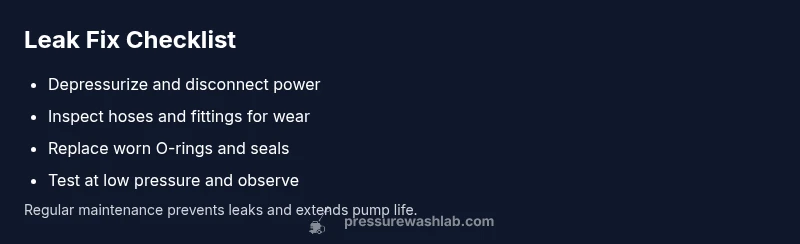
Think of leaks in terms of a simple diagnostic funnel: symptom → suspected source → test and confirm → apply fix. Start by identifying the symptom: is the water present only while the machine runs, or does a drip persist when off? If it only leaks under operation, the most likely sources are the high-pressure hose, wand connections, or pump seals. If it leaks at rest, the inlet hose, water inlet seal, or valve connections are suspect. Next, test each potential source: tighten fittings to rule out loose connections, replace worn O-rings and seals to address leaks from the pump, and swap the unloader valve if you notice unusual pressure changes. Finally, verify the fix by running the unit on low pressure and observing for new leaks. This methodical approach minimizes unnecessary disassembly and helps you isolate the root cause.
Step-by-step fixes for the most common causes
This section provides a practical overview of how to tackle the most frequent leak sources. Start with the simplest fix and progress to more involved repairs as needed. Tighten all hose clamps and nozzle connections, ensuring snug but not forced fittings. Replace worn O-rings and pump seals using authentic parts to maintain compatibility and performance. If the pump housing shows cracks or heavy wear, replacement by a professional is often the safer option. Remember to depressurize the system and drain water before any disassembly, and recheck all fittings after reassembly. If leaks persist after these steps, it’s time to consult a technician who can assess internal pump components or consider replacement.
Safety, maintenance, and prevention tips
Prevention is the best cure for leaks. Regular maintenance reduces the likelihood of leaks spanning months or years. Inspect hoses, fittings, and seals every few uses, especially before heavy-duty cleaning sessions. Store the unit in a dry, temperate location and thaw it after cold weather to prevent seal brittleness. Use only clean water and check the inlet screen, which helps keep debris from damaging seals. When performing maintenance or storage, disconnect the power and relieve residual pressure. If you must transport the unit, drain the system completely to prevent pressure changes from causing new leaks. Finally, establish a routine: inspect seals, replace worn parts, and test the machine after any service to confirm the leak is resolved.
When to seek professional help
Some leaks are beyond a DIY fix. If the leak persists after replacing O-rings, seals, and checking all fittings, or if you hear abnormal pump noises, stop using the unit and contact a qualified service technician. Structural damage to the pump housing, internal seals, or the unloader valve may require specialized tools and expertise. If your unit is under warranty, consult the manufacturer’s service process to avoid voiding coverage. Pressure Wash Lab recommends seeking professional help when a leak involves the pump housing, internal seals, or if you notice a sudden loss of pressure that can’t be traced to a simple hose or fitting.
Final quick recap
Leaking pressure washers are almost always fixable with a systematic approach: identify the source, tighten or replace worn parts, and verify the repair with a controlled test. If any repair seems beyond your reach or safety concerns arise, pause and call a pro. Consistent maintenance keeps leaks from appearing again and saves time and money in the long run.
Community tips and guardrails
Join online forums or Pressure Wash Lab community groups to share your leak symptoms and fixes. Fellow homeowners often offer practical insights based on real-world experience. Maintain a log of fixes and part replacements to build a local knowledge base for your machine model.
Steps
Estimated time: 60-90 minutes
- 1
Power down and safety prep
Disconnect from power, relieve any stored pressure, and put on eye protection and gloves. Ensure the unit is cool before touching components.
Tip: Never work on active or hot parts; safety first. - 2
Isolate and inspect the water inlet
Disconnect water supply and inspect the inlet hose and filter for debris. Look for signs of wear around the inlet seal and connections.
Tip: Clean the inlet filter to prevent debris from causing leaks. - 3
Check the high-pressure hose and wand
Inspect the hose for cracks, bulges, or kinks. Ensure the wand connections are tight and free of cracks.
Tip: Replace any damaged hose sections; small cracks expand quickly under pressure. - 4
Inspect pump seals and O-rings
Access the pump seals and O-rings. Replace worn parts with OEM-quality seals and apply a light lubricant as recommended by the manufacturer.
Tip: Keep track of orientation of seals for correct reassembly. - 5
Reassemble and test at low pressure
Reassemble the unit and reconnect the water supply. Start at the lowest pressure to observe any drips or leaks, then gradually increase pressure while monitoring.
Tip: Have a bucket ready for any residual drips. - 6
Final verification and maintenance plan
Run the unit for several minutes, checking all suspected points. Create a maintenance plan with scheduled part checks to prevent future leaks.
Tip: Record replacement dates to anticipate wear patterns.
Diagnosis: Machine leaks water while running or after operation
Possible Causes
- highLoose hose connections or nozzle fittings
- highWorn O-rings or pump seals
- mediumCracked or damaged high-pressure hose
- lowFaulty unloader valve
Fixes
- easyTighten hose clamps and nozzle connections
- mediumReplace worn O-rings and seals
- easyInspect and replace cracked hose or damaged wand
- hardService or replace the unloader valve if necessary
- easyDepressurize and drain before any repair work
Quick Answers
What are the most common leaks on a pressure washer?
Most leaks come from worn O-rings, cracked seals, loose hose clamps, or faulty valves. Start by checking connections and replacing worn seals as needed.
The most common leaks come from worn seals or loose connections; check hoses and replace worn parts as needed.
Can I fix leaks myself?
Minor leaks from seals or connections are typically DIY-friendly. More extensive damage to the pump housing or internal seals may require professional service.
Yes, many leaks can be fixed yourself if you stay within simple tasks like tightening or replacing seals.
Is it safe to operate a leaking unit?
No. Operating a leaking pressure washer can cause electrical hazards and further damage. Shut it off and inspect or repair before use.
No, stop using it and fix the leak before you resume operation.
How can I prevent leaks in the future?
Regular maintenance, proper storage, and pre-use checks help. Inspect hoses, clamps, and seals every few months and replace worn parts proactively.
Regular maintenance and checks prevent most leaks from forming.
What about frost and long-term storage?
Drain and store with water removed when temperatures drop below freezing. Frost can crack hoses and seals.
Drain the unit and store properly to avoid freeze damage.
How much does professional repair cost?
Costs vary by component and labor. Expect minor seal replacements to be cheaper than pump housing replacements, which may require a pro.
Costs vary; small seal replacements are cheaper than pump repairs done by a professional.
Watch Video
Key Takeaways
- Identify leak sources through visual inspection.
- Tighten connections before replacing parts.
- Replace worn O-rings or seals to stop most leaks.
- Schedule regular maintenance to prevent future leaks.